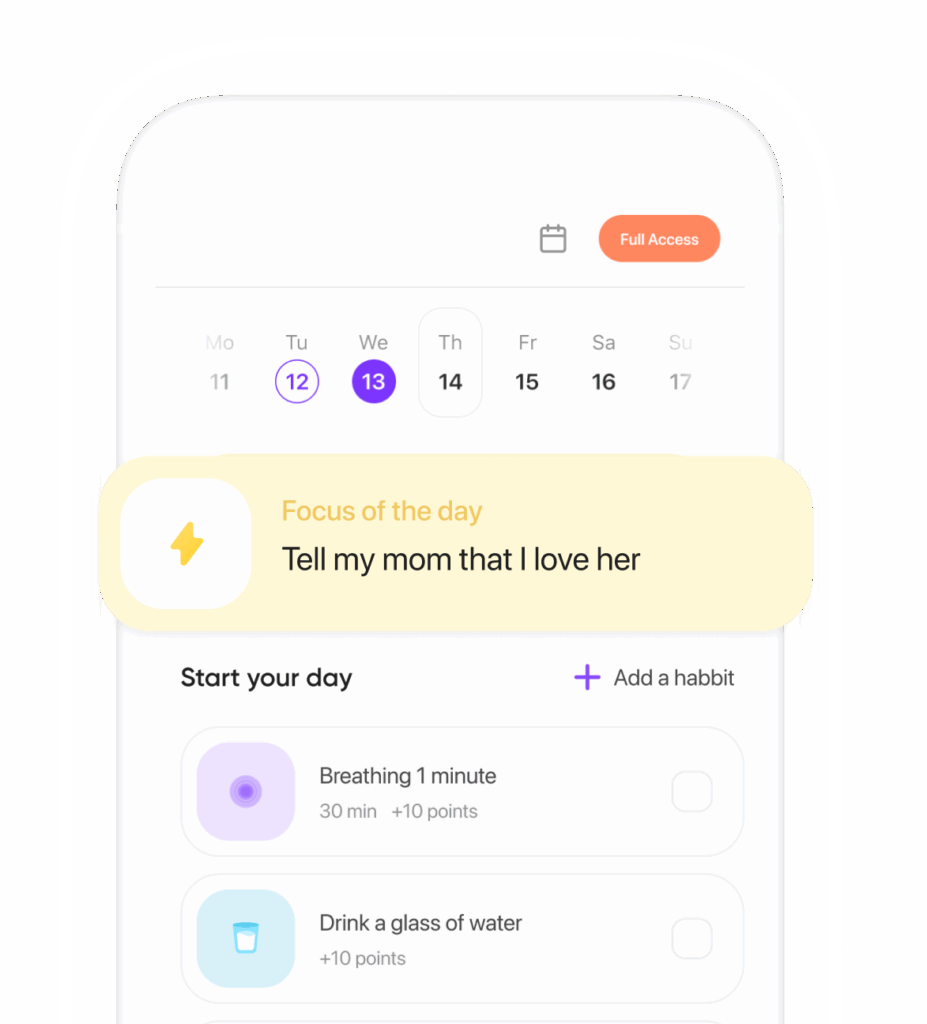
Move one reminder from a fixed hour to a cue you can see or notice, then do the task when that cue happens. If a weekday alarm works but weekends start later, you do not have to keep the same hour—keep the task and change what prompts it.
Choose a cue that happens before the task
Pick a household event you can point to, such as putting your dinner plate in the sink. The cue should usually happen before the task is needed and at a time when you can act. A clock time can still be useful, but it should not be the only prompt if your schedule shifts.
Here is an invented example. Maya wants her keys and bag by the door for the next day. Her 8 p.m. reminder works on weekdays, but on Saturdays she eats later and misses it. She changes the prompt to “After I put my dinner plate in the sink, put my keys and bag by the door.” The plate is the cue; the task stays the same.
Keep the action manageable. The American Academy of Family Physicians’ patient handout supports organizing and breaking tasks into smaller steps. It does not show that this particular cue works for everyone. Maya’s example is a practical illustration, not a tested routine.
Try the reminder on two different days
Put the cue and the action somewhere visible, such as a note beside the keys. Try the plan on a weekday and a weekend day, and notice whether you can act when the cue occurs.
- Name one action. “Put my keys and bag by the door” is clearer than “get ready for tomorrow.”
- Choose the cue. Maya uses putting her dinner plate in the sink because it usually happens before she needs her things ready.
- Set a realistic minimum. On a rushed day, her minimum is putting the keys in their usual spot. She can bring the bag over later.
- Try it on a weekday. After dinner, Maya puts both items by the door.
- Try it on Saturday. Dinner happens later, so she acts after the plate goes in the sink instead of waiting for 8 p.m.
- Adjust after a miss. If she cannot act because her hands are full, she can choose a later, more reliable cue or make the minimum smaller.
Plan for one exception
If Maya eats away from home, the dinner-plate cue will not happen. Her exception is to put her keys in their usual spot when she gets home. If even that is not practical, she does the minimum at the next available moment. A specific fallback makes the plan usable without requiring every day to look the same.
Keep the cue if you notice it and can act soon after it happens. Change it if it repeatedly arrives at an inconvenient time or does not happen on the days you need it. The aim is a reminder that fits your routine, not a perfect schedule.
This reminder exercise is separate from an ADHD assessment. The CDC describes adult ADHD symptoms and explains that diagnosis involves a clinical process, including assessing symptoms and their impact. For information about adult ADHD, see the CDC’s overview. A reminder or online reflection quiz cannot diagnose ADHD.
Choose a planner or explore the ADHD quiz