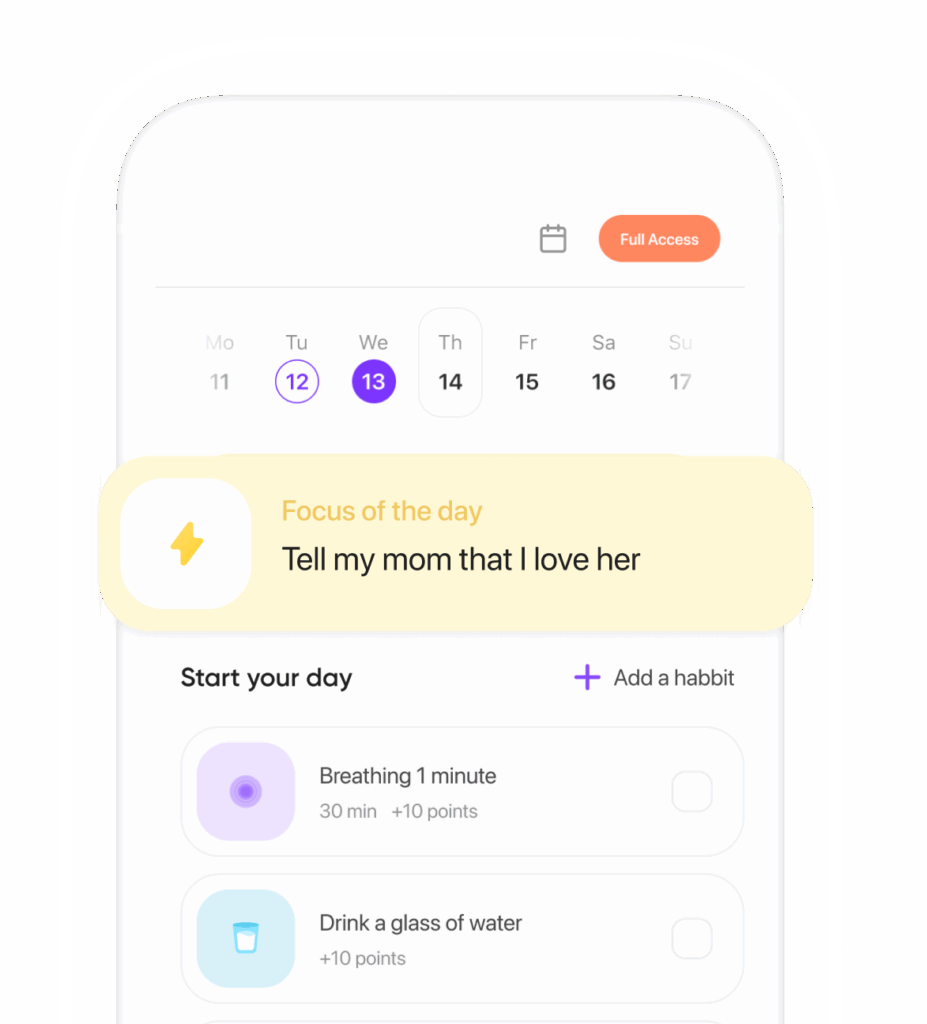
Put the routine’s first object where you will meet it, then decide whether a visible cue or a timed reminder works better for that household task. If you often notice a reminder but still forget what to do next, make the next action visible too.
Try it with tomorrow’s work clothes. On a scrap of paper, write: “When I put my mug by the sink after dinner, I’ll lay out a shirt.” Leave the card where you put the mug. On a rushed evening, laying out just the shirt is enough to test whether you notice the cue.
Compare the cue with the timer
A visible cue connects the task to something already in your space: a laundry basket beside the bedroom door, for instance. A timed reminder arrives at a chosen time, whether or not you are near the basket. Neither is automatically better; try the one that meets you where the routine happens.
- Visible cue: Put the basket where you will see it when you come in. On the card, write “When I enter the bedroom, put tomorrow’s clothes in the basket.”
- Timed reminder: Set a phone alarm for a time you are usually home. Give it an action label, such as “Put work clothes in basket,” rather than a vague label like “routine.”
The American Academy of Family Physicians’ patient handout includes organization strategies for ADHD. That supports using tools such as reminders and task organization; it does not show that one cue type works best for everyone or prove the specific example above.
Try the paper version across two days
- Day one: Write the bedroom-entry cue and first action on an index card. Place it beside the bedroom door, with the basket underneath. When you enter, put tomorrow’s clothes in the basket.
- Day two: Keep the same card and basket. Notice whether you see the card at the right moment and whether the first action is clear. If you pass the door before you can act, move the card to where you change clothes.
Keep the minimum realistic: put one item in the basket. If you have more time, finish setting out the outfit. This separates starting the routine from completing every step.
Make a smaller version for a disrupted day
If you arrive home late or the usual cue gets missed, use a fallback that needs no setup: place one work item by the bedroom door for morning. The routine still has a visible result, but the task is smaller.
Change the plan if the cue repeatedly appears too early, too late, or in a place you do not look. Move it or switch to a timed reminder that fits the household schedule. If the alarm goes off while you are occupied, choose a more reliable time or use the object cue instead.
Where Sunrise may fit
Sunrise may be worth considering if its current, verified features let you schedule a reminder or make a routine visible in a way that suits your plan. Check the actual interface before relying on it; do not assume a particular feature is available. A paper card and household object are enough to test the routine first.
This planner approach is separate from an ADHD quiz. The CDC’s guide to ADHD in adults explains that adult ADHD assessment involves clinical evaluation; an online reflection exercise is not a diagnosis. Use a quiz, if available and appropriate, only as a reflection tool, not as a substitute for assessment.
Choose a planner or explore the ADHD quiz