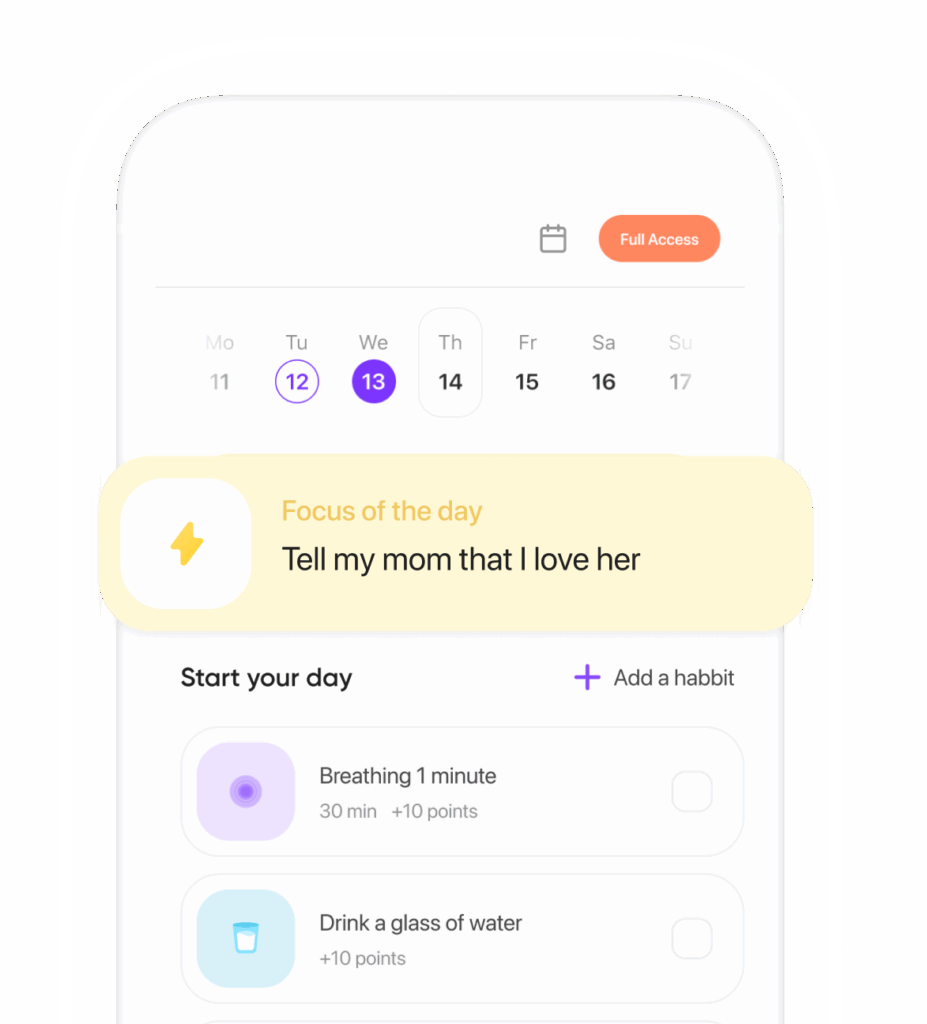
Put the reminder beside an object you already notice near the task, and make its wording name one clear action. If you forget to take out the recycling, place the note by the bin. If you miss it again, move the note to a cue you encounter more often. You do not need a new system for every task; start with one reminder you can see where you can act.
Match the reminder to a cue you notice
Choose a household object or moment that is already part of your day: the recycling bin, the kettle you use in the morning, or the door you leave through. Put the reminder right beside it. Keep the cue close to the task, so you are not relying on memory to check a separate list.
For example, imagine someone often forgets to take out the recycling on collection day. They write “Take recycling out before leaving” on a note and place it beside the bin. The bin is the cue; the note spells out the next action. This is a practical illustration, not evidence that one particular cue works for everyone.
The AAFP patient handout includes organizing and breaking tasks into smaller steps among its practical suggestions for adults with ADHD. In this example, “take the bin to the collection point” is a more specific step than “deal with recycling.” Read the AAFP patient handout.
Make a plan for ordinary and busy days
Choose a regular time and a realistic minimum. For the recycling example, the regular plan could be to take the bin out after dinner on the night before collection. A smaller minimum might be to put the bin beside the exit before bed. Decide on a fallback for a disrupted evening, too: move the note to the door you will use in the morning. That makes the reminder more visible, though it cannot guarantee the task will get done.
Set up the plan in a few steps:
- Choose one household task you have missed more than once.
- Pick an existing object or moment you notice near the task or the place you can act.
- Write a short reminder naming one action and place it beside the cue.
- Choose a regular time, a manageable minimum, and a fallback for a rushed day.
- If you miss the reminder, move it to a cue you encounter more often or make the action clearer.
Follow the recycling plan across two days. On a typical collection eve, the note beside the bin prompts the person to take it out after dinner. On a busy evening, that step does not happen, so they move the note to the exit before bed. If they still walk past the bin without noticing the note, they can change its location again rather than adding more reminders.
A cue can be changed when the routine changes, too. If the person stops using that exit in the morning, the note belongs near the door they actually use. The point is to test whether the reminder is visible at a time when action is possible, not to keep a cue that no longer fits.
Keep a planner separate from an ADHD quiz
A planner, checklist, or cue card can help record the task and its fallback. For example: “Recycling — cue: bin after dinner — busy day: note by exit.” This is a planning aid for one household task; it does not explain why someone forgets or identify ADHD.
The CDC describes adult ADHD symptoms and explains that diagnosis involves a clinical assessment. An online reflection quiz may help someone organize questions to discuss, but it cannot diagnose ADHD. If attention or organization concerns affect daily life, a qualified health professional can discuss assessment. Read the CDC overview of ADHD in adults.
Choose a planner or explore the ADHD quiz