Introduction
On a gray Monday in February, I stared at a blinking cursor, caffeine buzzing in my veins, calendar brimming with tasks… and still felt stuck. I’d promised myself I’d “work smarter this week,” but my energy arrived in unpredictable waves. What shifted everything wasn’t a new app or a prettier to-do list. It was a small promise I could keep: a 30 Day Habit Challenge for Productivity—one tiny, specific behavior each day that made the next day easier. Thirty days later, my output doubled, my stress dropped, and mornings felt less like a firefight and more like momentum. My view? Consistency beats intensity, nine times out of ten.
Image alt: build a 30 Day Habit Challenge for Productivity calendar on a wooden desk with coffee and pen
You might be feeling scattered, too—pinned between Slack pings, ambitious goals, and the weight of your own expectations. If that sounds familiar, here’s your blueprint. We’ll design a 30 Day Habit Challenge for Productivity that actually sticks, grounded in behavioral science, practical guardrails, and tiny wins that compound. One caveat from me: if a tactic feels brittle or joyless, it won’t last—adjust early.
Table of Contents
- Introduction
- Why a 30-day challenge works (and why willpower alone doesn’t)
- The architecture of a 30-day habit design
- A story from the messy middle
- Your 30 Day Habit Challenge for Productivity: The Day-by-Day Playbook
- The micro-habits that unlock more output
- Case studies, real lives
- Troubleshooting when motivation dips
- The science behind “feel-good” productivity
- What to track (and what to ignore)
- A simple daily log template
- Building permanence after Day 30
- A gentle word for busy, neurodiverse brains
- Your next 30 days can feel very different
- Summary and next step
- The Bottom Line
- References
Key Takeaways
- Consistency beats intensity: small, repeatable actions compound faster than big, sporadic efforts.
- Anchor habits to cues, start tiny (2-minute version), and protect sleep to boost focus and self-control.
- Design your environment to make good choices easy and distractions harder.
- Track meaningful inputs (deep work blocks, sleep, energy) and iterate weekly with brief reviews.
- When motivation dips, lower the bar—not the standard—and return quickly.
Why a 30-day challenge works (and why willpower alone doesn’t)
We’re told to “get motivated.” But motivation behaves like weather—sun one hour, rain the next. Structure turns “I should” into “I do.” Back in 2021, as remote work peaked, The Guardian reported on the rise of burnout and meeting overload; it wasn’t a lack of effort. It was a lack of rhythm. My bias: design your day so the good choice is the easy choice.
- Habits reduce decision fatigue. The brain loves routines because they offload choices to autopilot. The American Psychological Association has noted that willpower fluctuates with stress and sleep; building environments that remove friction is far more reliable than white-knuckling change (APA — What You Need to Know About Willpower).
- Sleep fuels focus, memory, and self-control. The CDC recommends at least 7 hours of sleep; short sleep is linked with impaired attention and productivity (CDC — How Much Sleep Do I Need?).
- Movement regulates mood and cognition. The WHO and CDC recommend at least 150 minutes of moderate activity weekly; consistent movement correlates with steadier energy and sharper thinking (WHO — Physical activity, CDC — Physical activity for adults).
- Light and screens shape your circadian rhythm. Blue light late in the evening suppresses melatonin and delays sleep timing, which cascades into groggy mornings and diluted output (Harvard Health Publishing — Blue light has a dark side).
“Habits are stress-tested behaviors. Once encoded by repetition and context, they demand less willpower. The goal of a 30-day design is to make doing the right thing easier than doing nothing.”
— Dr. Elena Park, Licensed Clinical Psychologist and Behavioral Scientist
I’d go further: the right design makes it harder to fail than to succeed.
The architecture of a 30-day habit design
Before we dive into the daily plan, we’ll build scaffolding so your 30 Day Habit Challenge for Productivity doesn’t topple at Day 6. Think foundation first, flourish later. My take: clarity is kindness—to your future self.
- Choose one keystone outcome. Not five. One. Examples: publish two blog posts per week, finish your portfolio by Day 30, or ship a prototype. Your daily habits serve this outcome.
- Define cues and containers. Habits bond to anchors: time, place, or preceding action. “After I brew coffee at 7:30 a.m., I open my daily priority doc.” Simple, specific, visible.
- Make it tiny first, then useful. Start with the 2-minute version (open doc, write one sentence, walk 5 minutes), then expand. Small acts reduce friction and build consistency.
- Track streaks and wins publicly (even if it’s just to a friend). Commitment plus visible progress builds identity. Personally, I think private accountability with one trusted person beats a performative thread.
“People try to build skyscrapers on quicksand. The foundation is clarity (what to do), consistency (when to do it), and feedback (what changed).”
— Dr. Miguel Ortega, PhD, Cognitive Psychology
Add patience, and you’ve got a plan that survives bad days.
A story from the messy middle
When Maya, 28, went through a painful breakup, her work slid. Deadlines stretched, sleep shortened. She set a gentle 30-day plan: phone off before bed, 20-minute morning focus sprint, and a nightly micro-review. By Day 10, she wasn’t perfect, but she’d written 9 of 10 mornings. By Day 21, she felt steadier. “It wasn’t epic discipline,” she said. “It was deciding once and then showing up to a routine that was waiting for me.” My read: healing often looks like rhythm, not heroics.
Your 30 Day Habit Challenge for Productivity: The Day-by-Day Playbook
Here’s a realistic, science-backed schedule that layers simple behaviors. You’ll see the WHY (brain/body reason) and the HOW (practical step). Customize times to your life. If a day feels too heavy, halve it. Better a smaller habit that sticks than a perfect one that snaps.
Week 1 — Foundation and friction removal
-
Day 1: Set one objective outcome for 30 days.
Why: Focus cuts cognitive switching costs.
How: Write: “By Day 30, I will [ship/submit/complete X].” Pin it at the top of your notes. My stance: if it isn’t written, it’s optional. -
Day 2: Sleep floor: 7-hour minimum.
Why: Sleep drives attention and self-control (CDC).
How: Set a bedtime alarm. Protect it like a meeting—no “just one more episode.” -
Day 3: Morning priority ritual, 10 minutes.
Why: Precommitment narrows scope.
How: At a fixed time, write three tasks, then circle the one “Must-Do.” If you can only finish that, you still win. -
Day 4: Design your desk and home screen.
Why: Environments cue behaviors.
How: Clear the desk. Dock only essential apps on your first home screen. Log out of social media on desktop. Opinion: clutter is a tax on attention you don’t need to pay. -
Day 5: Block two 25-minute deep-focus sessions.
Why: Batching maintains context.
How: Calendar them. Start with a two-line plan for Session 1. A kitchen timer works as well as any fancy tool. -
Day 6: Phone boundary: one “parking spot.”
Why: Visual distance reduces reflexive checking.
How: During focus blocks, place the phone face-down in a designated spot out of arm’s reach. My belief: out of sight, out of mind is underrated. -
Day 7: Sunday review and reset, 15 minutes.
Why: Reflection strengthens learning loops.
How: Write: What worked? What felt hard? One tweak for next week. Keep it brief. Honesty, not drama.
Week 2 — Focus, planning, and energy
-
Day 8: Timebox your day.
Why: Parkinson’s Law shrinks to fit your plan, not your anxiety.
How: Allocate blocks to tasks. Add padding and breaks. I prefer a 60/10 cadence; your brain may like 50/10. -
Day 9: Implement “2-minute open.”
Why: Starting is the highest-friction step.
How: Open the doc, write one sentence. If momentum bites, keep going. If not, you still kept the muscle warm. -
Day 10: Midday movement microdose, 10 minutes.
Why: Activity improves mood and alertness (WHO/CDC).
How: Walk around the block or do bodyweight moves between tasks. Opinion: the shortest walk often saves the longest afternoon. -
Day 11: Blue-light curfew one hour before bed.
Why: Improve sleep onset and quality (Harvard Health).
How: Night Shift on screens; swap scrolling for reading or stretching. A paper book beats doomscrolling, every time. -
Day 12: Task batching: email twice a day.
Why: Context shifts cost minutes.
How: Check at 11 a.m. and 4 p.m. with timers. Your inbox can wait; your focus can’t. -
Day 13: Weekly work sprint: 90-minute deep dive.
Why: Extended focus time pushes big rocks.
How: Friday morning block. Headphones, do-not-disturb, clear brief on paper. My take: pen-and-paper briefs prevent tab-hopping. -
Day 14: Gratitude and wins log, 5 minutes.
Why: Positive reinforcement cements identity.
How: List three wins, however small. Notice effort, not just outcomes. Call it what it is: training your brain to spot progress.
Week 3 — Energy and sustainable pace
-
Day 15: Morning sunlight exposure, 10 minutes.
Why: Anchors circadian rhythm, boosts alertness.
How: Coffee on the balcony, short walk, or sit by a bright window. I’m convinced light beats a second espresso. -
Day 16: Single-task rule for top task.
Why: Multitasking degrades quality and speed.
How: One tab. One doc. Finish the “Must-Do” before anything else. Guard it like a newsroom deadline. -
Day 17: Add a 5-minute mindfulness break.
Why: Mindfulness reduces stress and improves attention (Harvard Health).
How: Close eyes, focus on breath, count inhales to 10 and back. If your mind wanders, good—you noticed. My bias: five honest minutes beats a forced 20. -
Day 18: Fuel check: protein + fiber at lunch.
Why: Stable energy stalls the 3 p.m. crash.
How: Prep simple options. Eat away from your keyboard. Lunch is not a spreadsheet. -
Day 19: Weekly automation hour.
Why: Systems beat heroic effort.
How: Create templates, keyboard shortcuts, or rules that remove recurring friction. Future-you is the client; do the prep now. -
Day 20: Social accountability ping.
Why: We honor public commitments.
How: DM a friend: “Today I’ll finish X by 1 p.m.” Send a completion check-in. My experience: one real person beats a crowd. -
Day 21: Long walk or light workout, 30–45 minutes.
Why: Movement supports mood, sleep, and creativity (WHO/CDC).
How: Plan it like a meeting. Do-not-disturb on. Creativity likes oxygen.
Week 4 — Optimization and identity shift
-
Day 22: Habit stack your “Must-Do” after an existing cue.
Why: Attaching to a stable routine hardwires behavior.
How: “After I pour coffee, I open [project].” Same time, same place. Stacking is discipline’s quiet cousin. -
Day 23: Tidy your digital workspace.
Why: Clutter hijacks attention.
How: Archive, rename, and set default folders. Clear your desktop. If everything is important, nothing is. -
Day 24: Build a fail-safe plan.
Why: Life happens. Plan B prevents zero days.
How: If you miss your main session, do the 2-minute version by 6 p.m. A small win beats a skipped day—always. -
Day 25: Review your metrics.
Why: Feedback guides iteration.
How: Track days worked, output units, and subjective energy. I’d ignore perfection; watch for patterns. -
Day 26: Delegate or drop one low-impact task.
Why: Subtraction is productivity’s hidden engine.
How: Identify the 10% that gives 0% return. Let it go. Brutal? Maybe. Necessary? Yes. -
Day 27: Weekly “deep life” check-in.
Why: Align work with values to sustain effort.
How: Write one paragraph: How did this week move me toward what matters? My opinion: meaning outlasts novelty. -
Day 28: Prepare “Week 5” continuity.
Why: Avoid post-challenge drift.
How: Choose two habits to carry forward and lock them to cues. Momentum hates a vacuum. -
Day 29: Reflect with compassion.
Why: Self-criticism kills momentum; self-compassion predicts persistence.
How: Write to yourself like a friend. Name progress without qualifiers. Kindness isn’t coddling; it’s fuel. -
Day 30: Ship and celebrate.
Why: Closure reinforces identity.
How: Publish, submit, or present your work. Mark the day with a ritual. Ceremony matters—however small.
The micro-habits that unlock more output
Let’s zoom in on a few keystone practices you can’t see but will absolutely feel. My view: the quiet tweaks often carry the loudest results.
- Night-before reset. Clear your desk, set out water, open tomorrow’s doc. This is pure friction removal. Mayo Clinic notes that planning and prioritizing reduce stress while lifting productivity (Mayo Clinic — Time management).
- Two-tier tasks. Define the “Minimum Viable Progress” (MVP) for your top task (e.g., outline headings) and the “Stretch Goal” (e.g., complete draft). MVPs protect your streak; stretch goals ride the wave when energy is high.
- Moving breaks. Short walking breaks improve mood and mental clarity. If you feel guilty stepping away, remember: breaks are a productivity tool, not a luxury. I’d argue they’re non-negotiable.
“Most people try to sprint a marathon. The magic is in the repeatable cadence—protecting your mornings, replenishing energy at noon, and closing the day by teeing up an easy start.”
— Jordan Lee, Productivity Coach
Case studies, real lives
- Liam, 31, software engineer. He started with two daily 25-minute focus sprints and a five-minute shutdown routine. He shipped a side project in 27 days. The difference? Email twice a day, phone parked out of reach, and a walking meeting on Wednesdays. “I didn’t add hours,” he said. “I pulled forward the right hour.” My verdict: it’s not more time; it’s better time.
- Priya, 26, grad student. Battling late-night study doom loops, she installed a blue-light curfew and swapped her 11 p.m. TikTok habit for an actual book. After a week, she fell asleep faster; by Week 3, her morning reading summaries took half the time. Sleep gave her brain back its grip (Harvard Health on blue light; CDC on sleep). A modest change, outsized payoff.
Troubleshooting when motivation dips
You’ll hit lulls. Everyone does. Here’s how to keep your 30 Day Habit Challenge for Productivity resilient when real life barges in. My standing rule: lower the bar, not the standard.
- If you miss a day, reframe immediately. “I’m the person who returns.” Your identity isn’t the streak; it’s the return.
- If the habit feels heavy, shrink it. Go back to the 2-minute version. Repeat for two days, then expand.
- If distractions spike, change the environment. Different room, different playlist, different time. Novelty can reboot focus.
- If you’re tired, prioritize sleep over extra grind. Short sleep corrodes everything downstream (CDC). Rest is work.
- If resentment builds, make it more you. Add music, create a nicer workspace, or pair it with a rewarding ritual (tea, sunrise walk). Enjoyment is a force multiplier, not a nice-to-have.
The science behind “feel-good” productivity
Quick myth-bust: productivity isn’t suffering in a nicer font. It’s consistent alignment with your goals and your biology. My opinion—joy scales better than grit alone.
- Self-control is not fixed at birth. Psychological science shows it’s influenced by context, stress, sleep, and routines (APA). Good design beats good intentions.
- Mindfulness isn’t fluff. Even brief, consistent practice lowers stress and can sharpen attention (Harvard Health). Five minutes can change your afternoon.
- Movement is cognitive. Physical activity supports executive function, mood, and sleep (WHO/CDC). Ten minutes counts.
What to track (and what to ignore)
Track what nudges momentum. Ignore optics. Vanity metrics exhaust more then they inform.
- Do track: days executed, minutes in deep work, output units (features coded, pages written), sleep hours, subjective energy.
- Don’t track: raw hours online, streak perfection, or other people’s pace.
A simple daily log template
- Sleep: hours, quality (1–5)
- Energy at start: (1–5)
- Must-Do: [task]
- Deep Focus Blocks: number × minutes
- Movement: minutes
- Win(s): [three bullet points]
- Note for tomorrow: [one friction to remove]
Building permanence after Day 30
The finish line isn’t a finish; it’s a handoff. Take two habits forward and make them identity-level. Simpler is sturdier.
- I’m the type of person who protects 90 minutes of deep work before noon.
- I’m the type of person who shuts down devices one hour before bed.
Lock these to a cue, protect the container, and keep your Sunday review. That’s it. Complexity is the enemy after the challenge ends. My advice: resist the urge to add three more habits just because you can.
A gentle word for busy, neurodiverse brains
If you live with ADHD traits or chronic stress, plans can look perfect on paper and still slip. That doesn’t mean you’re failing. It means your plan needs to match how your brain actually works: shorter blocks, more novelty, immediate feedback, and especially easy restarts. I’ve seen this up close in coaching—short cycles win.
“Design for interruption. Build habits like Lego bricks—snappable, restartable. The win is returning quickly, not never pausing.”
— Dr. Aisha Malik, MD, Psychiatrist and Coach
Two quick power-ups for this:
- Visual timers and single-task cues. Externalize time and reduce option overload.
- Immediate mini-reward. Pair completion with a 60-second dopamine hit you control: song, stretch, step outside.
Your next 30 days can feel very different
Let’s be honest: it’s not about doing everything. It’s about choosing one thing and doing it repeatedly until it starts doing you. When you build a 30 Day Habit Challenge for Productivity, you’re not just chasing checkboxes—you’re building a scaffolding for a calmer, more effective version of you. In thirty days, the cursor will still blink. The difference is that you’ll already be typing. It’s ordinary, steady, human work—and it works.
Summary and next step
You now have a practical, science-backed framework to build a 30 Day Habit Challenge for Productivity—tiny steps, smart cues, and steady reflection. Start with one keystone outcome, protect sleep, timebox your focus, move a little daily, and review each week. Momentum compounds faster than most people expect.
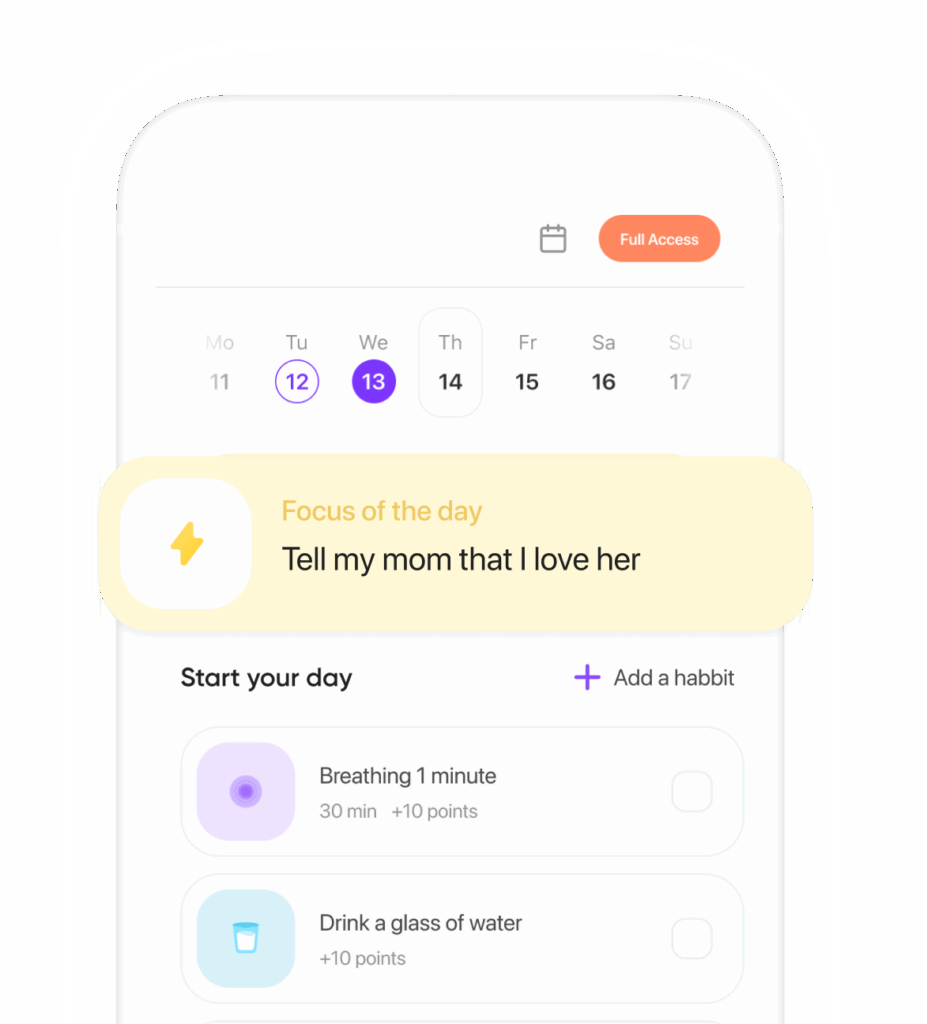
Want personalized structure that sticks? Try Sunrise – ADHD Coach for iPhone: habit tracking, focus timers, and AI-powered daily planning designed for ADHD minds. Start your 30-day momentum today: https://apps.apple.com/app/adhd-coach-planner-sunrise/id1542353302
The Bottom Line
Pick one outcome, make it tiny, and tie it to a cue. Protect sleep, plan your focus in blocks, move a little daily, and review weekly. When motivation dips, do the 2-minute version and return fast. In 30 days, you’ll have a calmer system that quietly delivers more of what matters.
References
- Centers for Disease Control and Prevention — How Much Sleep Do I Need?
- Centers for Disease Control and Prevention — How much physical activity do adults need?
- World Health Organization — Physical activity
- Harvard Health Publishing — Blue light has a dark side
- Harvard Health Publishing — Mindfulness meditation may ease anxiety, mental stress
- Mayo Clinic — Manage your time to minimize stress
- American Psychological Association — What You Need to Know About Willpower: The Psychological Science of Self-Control