Table of Contents
- Introduction
- The Science of Habit Formation
- Start with Tiny Actions
- The Role of Environment in Building Habits
- Emphasizing the “Why”
- Accountability as a Catalyst
- Celebrate Progress
- Technology: A Modern Ally
- Developing Habit Resilience
- Practical Steps for Building Consistent Habits
- Empowering the Future You
- The Bottom Line
- References
Introduction
There’s a captivating tale about James Clear — yes, the very James Clear who wrote “Atomic Habits.” Once an average baseball player, his athletic dreams were cut short by a painful head injury. Instead of wallowing in defeat, he redirected his life toward understanding habits and the intricacies of behavioral science. His epiphany? The extraordinary impact of modest, consistent actions. This idea — daily consistency, or simply doing small things over and over until they become part of who we are — is the essence of creating positive habits. Imagine for a moment transforming your health, your career, your entire outlook on life, just by harnessing this not-so-secret ingredient.
Why, you might wonder, is daily consistency so critical in forming habits? Let’s face it, we’ve all charted those wild goals only to falter a few weeks in. Haven’t we all? If this hits close to home, the reason might just be focusing too much on the big win instead of the journey there. Real change doesn’t spring from frantic bursts of effort. It’s a slow drip — much like how water, given time, can sculpt even the hardest of rocks — that gradually reshapes our world.
The Science of Habit Formation
Take it from Dr. Wendy Wood, a psychologist at the University of Southern California, who found that habits account for roughly 43% of our daily activities, moving silently beneath our consciousness. They free our minds, allowing us to focus on more complicated decisions — powerful indeed.
The most intriguing aspect of habits, as revealed by MIT researchers, is that they manifest in a loop: cue, routine, reward. The cue — it’s the spark that triggers a behavior. The routine? That’s the behavior itself, plain and simple. And the reward? Well, it’s your brain affirming a successful outcome. Over time, this loop becomes ingrained in our neural pathways. Fascinating, isn’t it?
Start with Tiny Actions
Picture this: Maya, at 28, found herself navigating the aftermath of a divorce. A daunting marathon was initially unimaginable, yet running offered solace. Maya began where one should — with a step. Ending each evening’s dinner, she was prompted to walk. Slowly those walks gave way to jogs, and eventually, she reveled in her first 5K.
This is what Micro Habits are all about. Think of them as seeds. Plant them right, tend to them regularly, and soon enough, you’ll witness a towering tree. If you’re eager to read more, start by linking a single page to your morning coffee. It’s less about size than it is about making it unavoidable.
The Role of Environment in Building Habits
How often do you find yourself mindlessly grabbing your smartphone? It’s undeniable: our environment influences our behaviors. A slight alteration can deeply affect habit formation.
“Shape your environment to make desired habits easy, and unwanted ones tougher.”
— Dr. Sarah Chen, NYU
Take minimizing screen time, for instance. Don’t just rely on sheer willpower. Switch your phone to grayscale and place a book by your bed. That could be the nudge to opt for pages over pixels.
Emphasizing the “Why”
At your core, you’re likely moved by profound reasons — maybe it’s crafting a healthier lifestyle or seeking financial freedom. Before diving into new habits, pinpoint your “why.” This serves as your North Star, steering you through inevitable storms when motivation dwindles.
As mentioned in the Harvard Business Review,
“People with sharply defined goals have a tenfold better chance at success.”
— Harvard Business Review
Spend time contemplating what a particular habit could offer to your life — jot down your motivations, or create a vision board. It primes your mind for consistency, does it not?
Accountability as a Catalyst
Ever heard the saying, “If you want to go fast, go alone. If you want to go far, go together”? Embracing accountability can be transformational. Maya, for instance, joined a local running group, anchoring her running habit through shared experiences every Friday.
Dave Gray, author of “Gamestorming,” notes that
“Group accountability nurtures belonging and shared drive.”
— Dave Gray, Author
Whether it’s having a workout partner or using a digital habit tracker, find a structure that resonates with your future self. You’re likely to feel an even stronger pull to stay committed.
Celebrate Progress
All too often, we underestimate the strength of rewards. But once established, they candy-coat the habit loop into our brains. Celebrations don’t need to be lavish. When Maya achieved her small wins, she’d treat herself to new sneakers.
As Charles Duhigg discusses in “The Power of Habit,”
“Rewards solidify behavior.”
— Charles Duhigg, Author
By regularly recognizing your progress, no matter the size, you’re encouraging your brain to crave more. Consider spoiling yourself with experiences that nurture your soul — maybe that book you’ve been eyeing, or a peaceful walk after a productive spell.
Technology: A Modern Ally
In our digital era, myriad tools await to aid habit formation. Apps that track, gamify, remind — even knit you into communities pursuing similar goals — can be priceless. Crafting a digital log of your journey can motivate and reflect on just how far you’ve traveled.
Choose tech that melds with your life. For Maya, a fitness app syncing with her smartwatch transformed her runs into personal challenges, offering immediate feedback.
Developing Habit Resilience
Challenges will arise — that’s a given. The aim isn’t to steer clear of setbacks but to foster resilience. Embrace this mindset shift, seeing these bumps as learning opportunities rather than roadblocks.
Dr. Emily Moore from Harvard advocates for a “growth mindset,” a term popularized by Carol Dweck, where failures are stepping stones for learning. When a habit veers off course, dig into why. Was it the habit, the reward, or something entirely else?
Practical Steps for Building Consistent Habits
- Identify One Focus Area: Zero in on a single habit. Spreading yourself thin can scatter your energy. It’s about depth, not breadth.
- Implement Tiny Changes: Pare the habit down to its simplest form. Keen on meditation? Start with just two minutes.
- Environmental Cues: Shape your surroundings. For instance, to drink more water, place water bottles throughout your home.
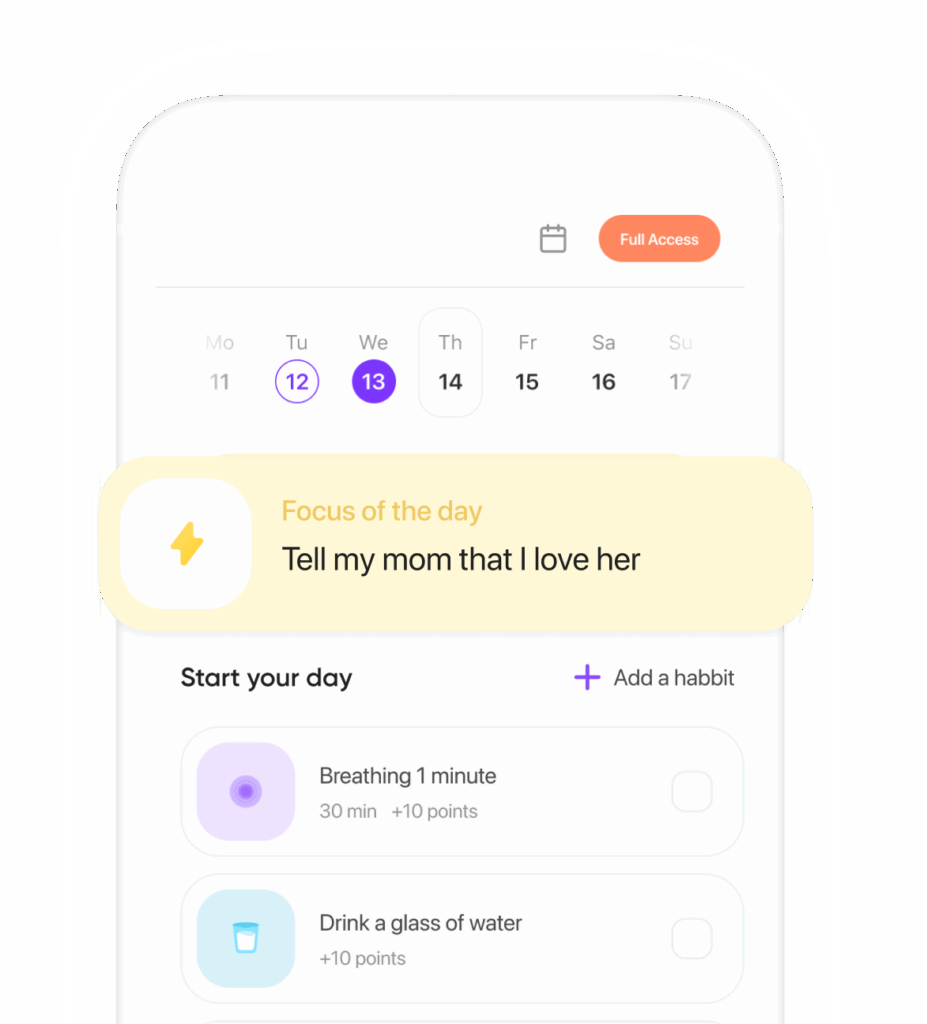
- Utilize Technology: Let apps nudge and track your progress. Sunrise – ADHD Coach? Perfect for those seeking structure.
- Embrace Accountability: Tell a friend about your goals or join a community for extra support.
- Celebrate Wins: Each achievement, however minor, deserves a nod.
Empowering the Future You
The art of building habits with daily consistency holds transformative power, and echoes the ethos of kaizen — the Japanese pursuit of continuous improvement. Step by step, you can wield this philosophy to shape your aspirational life. As you embark on these steps, remember: It’s not perfection you’re after. It’s about adjusting your sails amid life’s winds, grounded by your habits. This journey shapes a resilient, meaningful future.
Key Takeaways
- Focus on daily consistency rather than overwhelming goals for habit formation.
- Start small with micro habits to ensure lasting changes.
- Shape your environment to support your desired behaviors.
- Understanding your “why” enhances motivation and accountability.
- Celebrate small wins to reinforce positive habits.
The Bottom Line
By weaving habit science into your life, the path to a fulfilled and accomplished life is at your feet. Take those initial steps with purpose, and let daily consistency chart your course.
References
- Wendy Wood – dornsife.usc.edu
- Harvard Business Review – hbr.org
- MIT – web.mit.edu
- Charles Duhigg’s “The Power of Habit” – Check at your local library or Amazon
- Carol Dweck’s work on “growth mindset” – Available on scholarly databases and bookstores.
Ready to take the next step in habit-building? Embrace the future you with Sunrise – ADHD Coach. This app, suited for ADHD thinkers, offers habit planning, focus tools, and AI-driven guidance tailored for your journey. Download now: Sunrise – ADHD Coach