Table of Contents
- The Habit Hassle: Why We Struggle
- The Science Behind Successful Habit Formation
- Building a Foundation: The 4 Laws of Behavioral Change
- Real-World Success Stories: From Overwhelmed to Overachieving
- Leveraging Tools and Technology
- Expert Insights and Motivation
- Staying the Course: Overcoming Common Challenges
- Closing Thoughts: Create Your Legacy of Change
The Habit Hassle: Why We Struggle
It’s no secret: forming bad habits seems as natural as breathing. Ever found yourself glued to social media late at night or binging on midnight snacks? It’s as though our brains are all too keen to latch onto these comforts. However, flipping these into positive routines feels akin to summiting Everest—barefoot.
Dr. Wendy Wood, a respected psychology professor at the University of Southern California, puts it in perspective. She points out that around 43% of our daily actions stem from the habits rather than deliberate choices. This means changing habits involves a near Herculean task of reprogramming nearly half of our automatic responses each day.
“It’s not all about willpower,” she says. “It’s about escaping the allure of familiarity.”
— Dr. Wendy Wood, Psychology Professor
The Science Behind Successful Habit Formation
Recent forays into behavioral science reveal a pivotal point: the magic lies in cues and rewards. Our brains crave routines because they strip away the complexity of decision-making. Attach a new behavior to a familiar cue and reward it consistently, and—voilà!—those brain pathways start to morph. Call it ‘habit stacking’ if you will—an approach lauded for its effectiveness.
James Clear, the voice behind “Atomic Habits,” stands by this strategy, suggesting incremental changes.
“Need to drink more water? Pair it with brushing your teeth,” Clear suggests. “You’d be surprised at how ‘stacking’ can sculpt behavior.”
— James Clear, Author
Building a Foundation: The 4 Laws of Behavioral Change
Diving into the practical sphere, whether it’s more exercise, more reading, or fewer screen hours you’re after, four foundational principles can steer you toward solidifying lasting habits:
- Make It Obvious
First things first, zero in on clear cues in your environment. Your surroundings play a massive role in shaping behavior; the more glaring the cue, the more likely the action. Picture this: place your running shoes right by your bed so you can’t miss them for your morning run.
In a “Journal of Consumer Research” study, researchers concluded that visual, immediate cues pack the most punch. “Out of sight, out of mind” isn’t unfounded—it’s proven.
- Make It Attractive
Harness the power of dopamine in habit building—our ‘feel-good’ neurotransmitter. Combine a new task—something you’re less thrilled about—with a favorite pastime. Not fond of reading? Pair it with your favorite tunes. B.J. Fogg from Stanford University sums it up:
“Pairing an action with a true delight transforms the habit’s appeal.”
— B.J. Fogg, Behavioral Scientist
- Make It Easy
Start small. Bite-sized. The tinier the habit, the easier it is to start and sustain. It’s progress we’re aiming for, not perfection. If meditating an hour seems daunting, trim it to five minutes. This gentle increase fortifies the behavior without overwhelming you.
A study from “The European Journal of Social Psychology” underscores this point: small actions breed lasting habits. Lower that initial barrier, like setting out your workout gear the night before.
- Make It Satisfying
Rewards are not mere cherries on top—they’re vital reinforcers. Whether a small indulgence or a moment of self-reflection at the day’s end, satisfaction builds neural pathways that embed habits.
Real-World Success Stories: From Overwhelmed to Overachieving
Take Maya, a 28-year-old rebuilding post-divorce. Her mornings were stress-riddled, mired in procrastination. Habit formation guided her journey back, starting with morning gratitude.
Every day, Maya listed three things she was thankful for. This simple act anchored her positively and introduced subsequent habits.
“Gratitude journaling was my turning point,” she shares. “Not an overnight fix, but it laid the groundwork.”
— Maya, Habit Builder
Incrementally, morning stretches and short runs followed. Today, Maya strides forward, describing herself as “living intentionally.”
Leveraging Tools and Technology
In our tech-laden era, tools designed for personal growth abound. Habit-tracking apps, digital planners, and tech-assisted tools can be game-changers in your quest to build enduring habits.
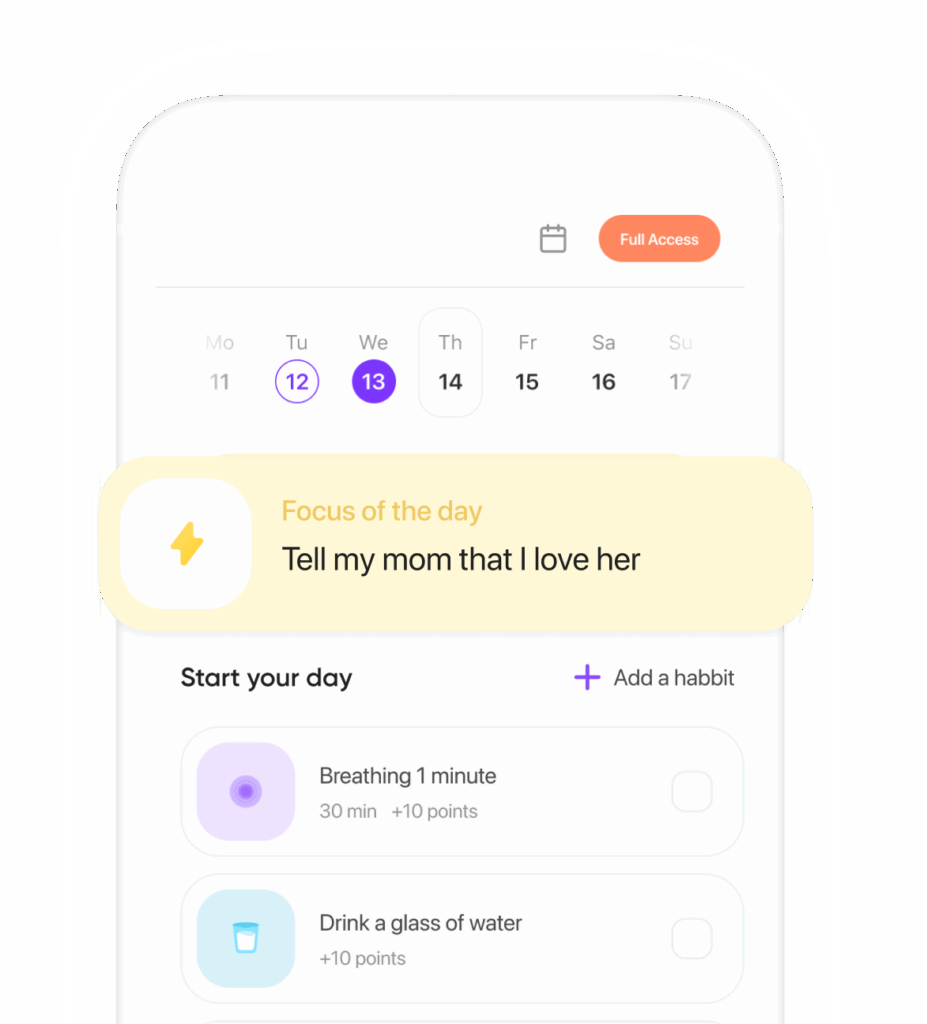
Think habit trackers—apps that offer both visual cues and motivational progress updates. Sunrise, for instance, offers the ADHD Coach app, tailored for personalized habit tracking. Consider adding it to your toolbox—it’s available on the App Store.
Expert Insights and Motivation
Dr. Sarah Chen from NYU challenges us:
“Connect habits to your core values. Why does this matter?” she urges. The deeper your ‘why,’ the stronger your resolve.
— Dr. Sarah Chen, Psychologist
Align your habits with what you cherish. Trying to exercise more? Link it with your core health values, not mere aesthetics.
Staying the Course: Overcoming Common Challenges
Embarking on this journey might feel exhilarating, but don’t forget: habit building demands both patience and resilience. Setbacks will test you. This isn’t a sprint—it’s a marathon.
Meredith, a 35-year-old mom, tapped into self-compassion’s power.
“One missed day didn’t mean defeat,” she discovered. “Embracing imperfections crushed the guilt.”
— Meredith, Habit Builder
James Clear backs this: changing habits changes identity. Potholes in the road become hurdles—not mirrors of failure.
- Celebrate Small Wins
Each step, no matter how small, deserves recognition. Writing a book? Every paragraph counts. Celebrate—it feeds persistence.
- Avoid the All-or-Nothing Trap
Consistently trumps perfection. One slip doesn’t spell failure. It’s a long-term journey.
- Accountability Helps
Align with a buddy or a community sharing similar goals. The social fabric propels motivation.
Closing Thoughts: Create Your Legacy of Change
Building habits is a journey that mirrors no other. Unique, just like your DNA. Approach it with curiosity, relish in learning.
You’ve uncovered actionable steps—from psychology and habit science to expert advice and tech’s promise. Assemble the puzzle pieces before you—they’re ready to craft a life you’re proud of.
Empower your journey: “Start small, be consistent.” Habits shape your destiny. Each choice—a brick in a brighter future.
Key Takeaways
- Building habits requires a blend of patience, discipline, and strategic thinking.
- Habit formation is best supported by cues and rewards—use “habit stacking” for effective change.
- Four key principles can guide you: Make it obvious, attractive, easy, and satisfying.
- Utilize technology, like habit-tracking apps, to enhance your habit-building journey.
- Celebrate small wins and embrace imperfections to stay motivated.
The Bottom Line
Building lasting habits is a personal journey that demands focus and consistency. By understanding the science behind habit formation and applying practical strategies, you can create lasting change in your life. Start small and use the support available to you for a successful transformation.
Extend your journey with Sunrise – ADHD Coach, designed for habit tracking, goal crafting, and focus honing, ensuring growth and mastery. Download Sunrise ADHD Coach.