Table of Contents
- Understanding the Power of Habits
- The Neuroscience of Habit Formation
- Steps to Building Good Habits with Daily Consistency
- Overcoming Common Obstacles
- Transforming Real Lives with Habits
- The Role of Technology
- Embrace the Journey
Key Takeaways
- Habits significantly influence our daily lives, making up almost 40% of our actions.
- Starting small and building on habits gradually leads to sustainable change.
- Accountability and visualization are powerful tools for improving consistency in habit formation.
- Overcoming initial resistance and setbacks is crucial for developing new habits.
When Maya hit the wall of her unexpected divorce at 28, it was as though her world had been tossed into a blender—chaos swirling, with no pause button in sight. Yet amid this storm of emotions, a small, surprising beacon of hope emerged in an unlikely form: the art of building habits. By carving out daily rituals, tiny in their singularity but mighty in their consistency, she began to piece her life back together.
Feeling overwhelmed, just like Maya did, is all too common. Ever been there? When life’s curveballs leave you stranded and motivation dries up like a well in summer? There’s a quiet strength in habits that mould chaos into coherence. The trick? Daily consistency.
Understanding the Power of Habits
Habits, those stealthy architects of our lives—like a potter shaping clay. Charles Duhigg, in his much-referenced work The Power of Habit, posits that nearly 40% of our day isn’t driven by conscious choices but by routines. Think about it: are you really choosing your coffee every morning, or is it just like brushing your teeth? These habits are the unseen forces steering our course, small shifts each day rippling out into life’s bigger transformations over time.
“Patterns and routines—those are the new normal your brain yearns for.”
— Dr. Sarah Chen, NYU
The Neuroscience of Habit Formation
Peek inside the brain, and it’s clear: efficiency reigns supreme. It automates what we repeat, freeing up bandwidth for everything else. Enter the “habit loop”—cue, routine, reward.
- Cue: A subtle sound, a fleeting sight—signals that prod your brain into action.
- Routine: The very act unfolding, almost of its own accord.
- Reward: The outcome, the dopamine hit that tells your neurons, “Let’s do that again!”
Research from MIT underscores the basal ganglia’s role, a sliver of gray matter that safeguards these routine actions, liberating your mind for more pressing matters. Want to inculcate positive habits? Anchor your brain with sturdy cues and gratifying routines.
Steps to Building Good Habits with Daily Consistency
1. Start Small and Build Up
The ambitious often stymie themselves by reaching too far, too fast. Stanford’s BJ Fogg, advocating the “Tiny Habits” approach, champions an incremental path. Want to introduce exercise into your life? Perhaps begin with a quick five-minute stretch and incrementally expand.
2. Create a Habit Stack
Harness your existing behaviors as a foundation for new ones with habit stacking. Think of it like piggybacking—James Clear’s Atomic Habits suggests pairing newfound aspirations with enduring behaviors. Meditate right after brushing your teeth, linking the old with the new, cutting through neurological red tape.
3. Be Transparent and Accountable
Letting others in on your goals can drastically tilt the scales toward success. The American Society of Training and Development reports you’re a whopping 65% more likely to triumph if someone else is bearing witness. A confidant, an audience, a partner—let their watchful eyes spur you on.
4. Visualize Your Success
Painting mental pictures isn’t just for dreamers. A daily practice of visualizing success creates a motivational tapestry. Imagine your ideal self performing the habit. Visualization isn’t mere daydreaming; it’s a rehearsed path to achievement.
5. Track Your Progress
Wouldn’t it be reassuring to see your journey mapped out? Keeping a log—be it in a charming journal or a slick app—shows how far you’ve come and points out where to tweak. The American Journal of Preventive Medicine found habitual trackers shed more than twice the weight those without did.
Overcoming Common Obstacles
Life does not politely step out of our way, and forces that oppose our goals do not come labeled and confined. What can we do when resistance and setbacks emerge from the shadows?
1. Battle the Initial Resistance
Getting started is like pushing a boulder uphill. This initial reluctance isn’t your laziness talking—it’s your brain’s frontal cortex wrestling with new scripts, craving the comfort of old patterns.
2. Handle Setbacks Gracefully
Everyone falters, even Maya. When slip-ups find you, don’t linger—learn. Dr. Amy Wood encourages reflecting on mistakes with self-empathy. Consistency is indeed key, but its true power lies in stubborn persistence—not perfection.
3. Stay Adaptable
Not all habits take root in the same soil. Should one falter, don’t hesitate to recalibrate. Flexibility is your ally; if mornings won’t do, evenings might. Tweak the environment, alter the schedule, and meet yourself where you are.
Transforming Real Lives with Habits
Consider John, a 34-year-old software engineer tangled in the web of work-life ideals. Integrating his desired routines felt like juggling fire—until he started minuscule, immersing himself in ten-minute post-lunch readings. The snowball rolled slowly but picked up speed, growing to include rituals like unwinding before bed and invigorating morning jogs. His example reminds us: perfect fits aren’t off-the-rack but tailored, evolving from trial and precision.
The Role of Technology
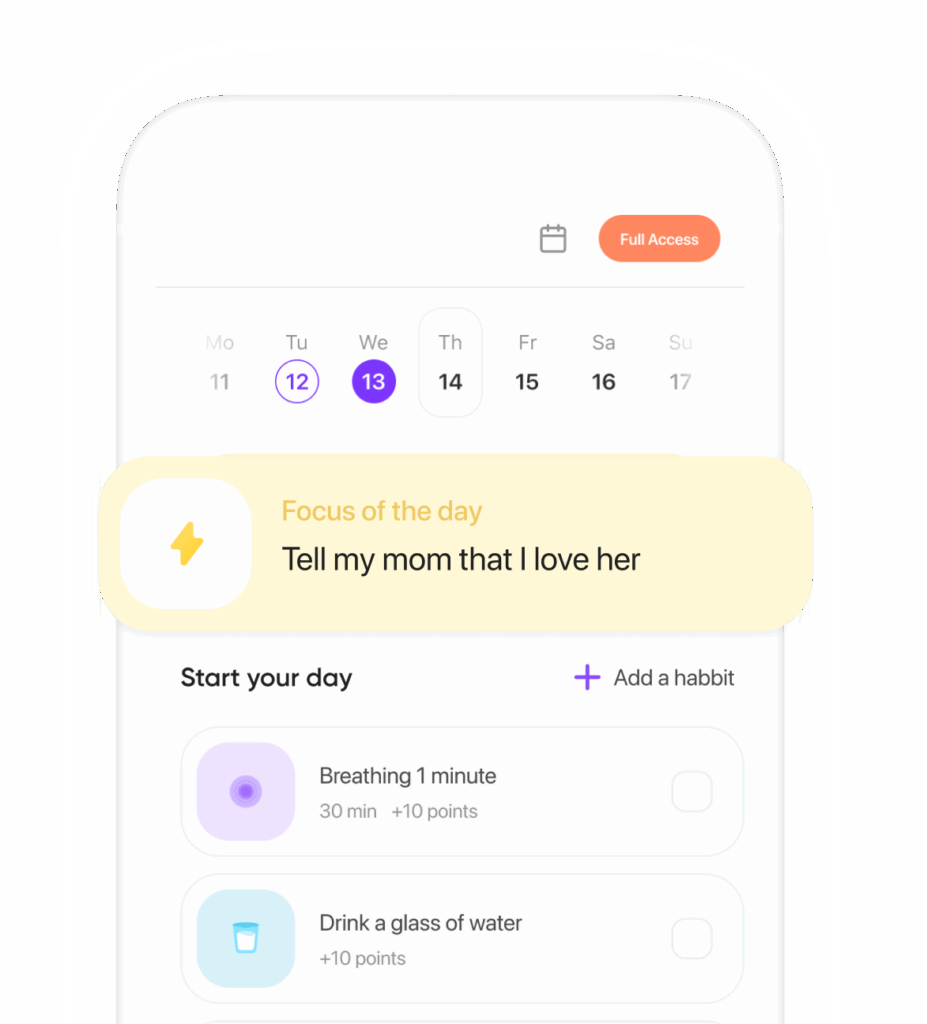
In this digital age, why not partner with technology? Apps like Sunrise, which stitch together your aspirations with alerts and insights, can smooth the journey. According to behavioral scientist Dr. Ravi Patel, tech acts as a gentle nudge, whispering your objectives back when they’ve wandered into forgetfulness.
Embrace the Journey
Ultimately, the marathon of habit-building is not solely about crossing finish lines but savoring each stride. It’s about sculpting progress. Reflect on Maya, on John, and on fellow journeyers whose stories began with the mere flicker of hope and a singular leap into the familiar unknown—repeated, daily.
In moments of doubt, remember that stories like theirs began just like yours: with a step, practiced consistently, into the power and potential waiting within habits.
With the app Sunrise by your side, download it—it can be your personalized compass on this voyage of rediscovery. Let its gentle prompts help unlock your latent powers.
The path to a transformed life is paved with steady new rituals. Dive headlong and see just how far it can take you—possibility awaits.
The Bottom Line
Transforming habits requires consistency and commitment, but with small steps, accountability, and the right mindset, you can reshape your life. Embrace the journey and leverage tools like the Sunrise app to stay on track.
References
- Duhigg, C. (2012). The Power of Habit.
- Wood, A. (2020). Self-Compassion Workbook.
- Clear, J. (2018). Atomic Habits.
- MIT Study on Habit Formation – Link
- American Journal of Preventive Medicine – Link
- ASTD Study – Link
- Mayo Clinic on the Role of Visualization – Link